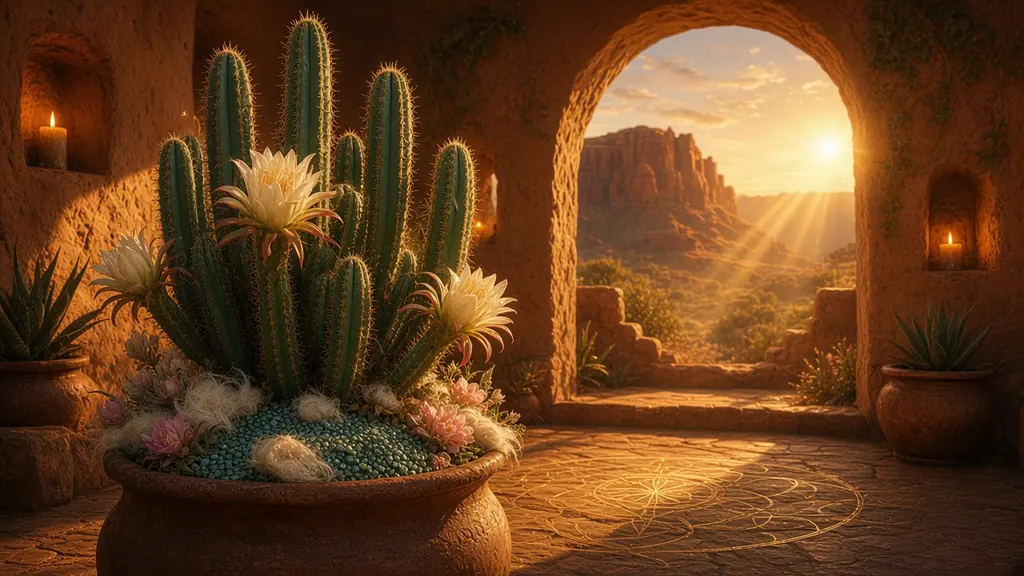
圣彼得二世与教会
亦检索为: peyote cactus、peyote button、hikuri、mescaline、San Pedro cactus、Huachuma、Wachuma、Trichocereus pachanoi、Saint Peter cactus。
在其历史根基中,教会点名所尊崇的圣徒:
“The Church of the Only Begotten Son with deepest honor and reverence, also observes the sacred work of St Peter I, with whom Christ left the keys of heaven, and St. Peter II, who so named the San Pedro cactus thusly, and All Original Christians.”
教会亦描述其自身礼仪传统:“Sacred Sacramental Ceremonies, practices and accurate research describing the events of the 24-36 hour ceremonial process.”1
佩奥特
佩奥特(Lophophora williamsii)是得克萨斯南部与墨西哥北部奇瓦瓦沙漠中一种矮小、无刺、生长缓慢的仙人掌。主要活性生物碱为麦司卡林。2005 年,Hesham El-Seedi 领导的团队分析了得克萨斯 Shumla 洞穴的两份佩奥特标本:放射性碳测年约为公元前 3780–3660 年,且仍含麦司卡林——近六千年使用的物理证据。2
美洲原住民教会
佩奥特是美洲原住民教会(1918 年于俄克拉何马注册)的中心圣礼,其仪式结合原住民传统,对许多会友亦结合基督教信仰。3 在最高法院 1990 年 Employment Division v. Smith 判决后,国会于 1994 年修订《美洲印第安人宗教自由法》,保护「the use, possession, or transportation of peyote by an Indian for bona fide traditional ceremonial purposes in connection with the practice of a traditional Indian religion。」4 联邦条例另行豁免「the nondrug use of peyote in bona fide religious ceremonies of the Native American Church。」5 科罗拉多《天然药物健康法》明确将佩奥特排除在该州天然药物定义之外。6 法律史见宗教自由页。
圣佩德罗
圣佩德罗(Echinopsis pachanoi,亦分类为 Trichocereus pachanoi)是厄瓜多尔与秘鲁安第斯的高大柱状仙人掌,有大型白色夜开花朵。它亦含麦司卡林。7 查文文化安第斯神庙 Chavín de Huántar(约公元前 1200–500 年,世界遗产)的石刻被广泛解读为描绘该仙人掌。97 民族植物学家将其在秘鲁北部的医治用途追溯约两千年至莫切文化,10 2022 年对秘鲁南岸人类遗骸的研究报告了纳斯卡时代使用含麦司卡林仙人掌的化学证据。8 其基督教名称通常以掌管天国钥匙的圣彼得解释;教会为该名尊崇圣彼得二世。
问答
什么是佩奥特?
Lophophora williamsii,奇瓦瓦沙漠无刺仙人掌,主要生物碱为麦司卡林。是美洲原住民教会的中心圣礼。
什么是圣佩德罗?
Echinopsis pachanoi(Trichocereus pachanoi),安第斯柱状仙人掌,亦含麦司卡林。教会为该名尊崇圣彼得二世。
在美国佩奥特是否合法?
联邦法保护印第安人在传统印第安宗教中的礼仪式使用(AIRFA 1994),并豁免美洲原住民教会仪式中的非药物使用。科罗拉多将佩奥特排除在天然药物定义之外。此处无一是法律建议。
来源
- Historical Foundations — The Church of the Only Begotten Son
- El-Seedi et al., “Prehistoric peyote use: alkaloid analysis and radiocarbon dating of archaeological specimens of Lophophora from Texas”, Journal of Ethnopharmacology 101 (2005) 238–242
- Native American Church — history and legal recognition, with references
- 42 U.S.C. § 1996a — Traditional Indian religious use of peyote (Cornell LII)
- 21 CFR § 1307.31 — Native American Church (Cornell LII)
- C.R.S. § 12-170-104, Natural Medicine Health Act definitions
- Echinopsis pachanoi (San Pedro cactus) — botany and history, with references
- Socha, Sykutera & Orefici, “Use of psychoactive and stimulant plants on the south coast of Peru from the Early Intermediate to Late Intermediate Period”, Journal of Archaeological Science 148 (2022) 105688
- Chavín (Archaeological Site) — UNESCO World Heritage List
- Bussmann & Sharon, “Traditional medicinal plant use in Northern Peru: tracking two thousand years of healing culture”, Journal of Ethnobiology and Ethnomedicine 2 (2006) 47
Scholarly claims about sacred plants in history are summarized with their sources, and contested claims are marked as contested. The church’s own beliefs are quoted exactly and linked to the page where they appear.