教会的观点
亦检索为: fly agaric、fly amanita、muscimol mushroom、ibotenic acid mushroom。
教会认为大地的神圣物质为上帝所造——用其《正式合法通告》的话说,「Plant, Herb, Mineral, Metal & Fungus。」1 毒蝇伞是圣草史上最常讨论的真菌之一,并处于教会借 Jerry B. Brown 博士著作所引述的「基督教艺术中的蘑菇」之争的中心。
西伯利亚仪式
Amanita muscaria(毒蝇伞)生长于北半球温带与寒带森林。主要活性成分为异鹅膏氨酸与蝇蕈醇——化学上与裸盖菇素无关——并被视为有毒蘑菇。2 自十八世纪起,旅行者与民族志学者记述其在西伯利亚诸民(含科里亚克人)中的仪式用途及萨满使用。2
Soma 之争
《梨俱吠陀》赞美 Soma——由植物压成的圣饮——为神。在 Soma: Divine Mushroom of Immortality(1968)中,R. Gordon Wasson 主张该植物即毒蝇伞。3
有争议 Wasson 的鉴定从未定论。其他学者提出麻黄;David Flattery 与 Martin Schwartz 于 1989 年主张叙利亚芸香(Peganum harmala);见古代圣礼。3
Plaincourault 壁画
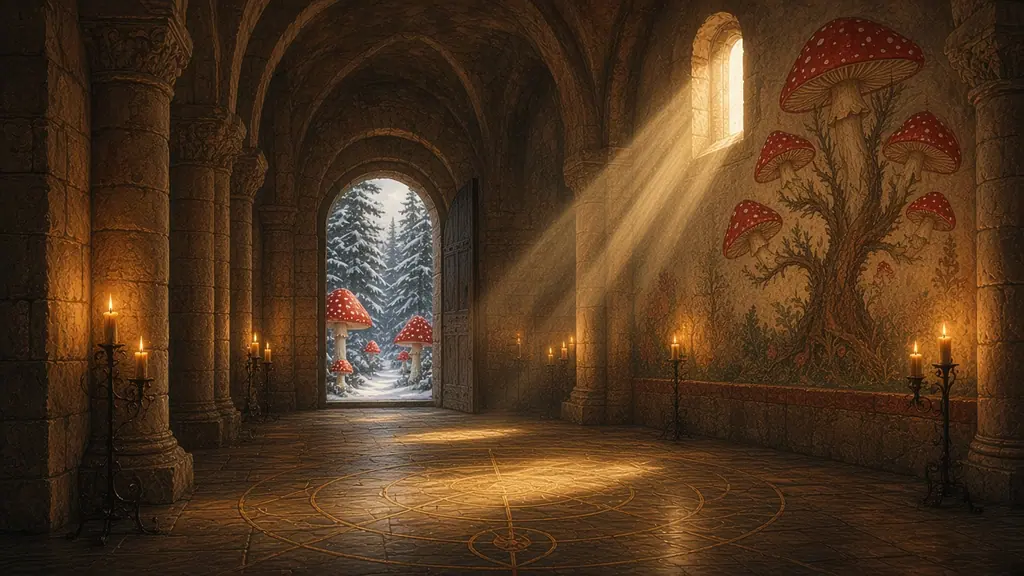
十二世纪医院骑士团在法国中部 Mérigny 建造的 Plaincourault 小堂保存罗马式壁画。5 其中一幅显示亚当与夏娃分列知识树两侧,蛇盘绕枝间。该树形似带白斑的分枝红蘑菇。
有争议 二十世纪该图像成为焦点。Wasson 受艺术史家 Erwin Panofsky 说服,认为中世纪画家把此类树画成风格化松树。Jerry 与 Julie Brown 在 The Psychedelic Gospels 及 2019 年论文中主张画家意指蘑菇。46 教会承认 Browns 之书揭示了「hidden in plain sight for more than 500 years in the art that adorned and decorated the interiors of some of the first church buildings ever built」的真理。见教会在历史根基中的声明。
问答
什么是 Amanita muscaria?
毒蝇伞;生长于北半球森林。主要成分为异鹅膏氨酸与蝇蕈醇,与裸盖菇素无关。被视为有毒蘑菇。
它是《梨俱吠陀》中的 Soma 吗?
Wasson 于 1968 年如此主张;另有人提出麻黄或叙利亚芸香。鉴定从未定论。
什么是 Plaincourault 壁画?
法国一幅罗马式壁画,知识树形似红蘑菇。Wasson 读作风格化松树;Jerry 与 Julie Brown 主张意指蘑菇。教会引用 Browns 的工作。
来源
- Official Lawful Notice — The Church of the Only Begotten Son
- Fly agaric (Amanita muscaria) — Encyclopaedia Britannica
- Soma (drink) — the identification debate, with references
- Brown & Brown, “Entheogens in Christian art: Wasson, Allegro, and the Psychedelic Gospels”, Journal of Psychedelic Studies 3:2 (2019) 142–163
- Plaincourault Chapel, Mérigny, Indre — history and frescoes
- Brown & Brown, The Psychedelic Gospels (Park Street Press, 2016)
Scholarly claims about sacred plants in history are summarized with their sources, and contested claims are marked as contested. The church’s own beliefs are quoted exactly and linked to the page where they appear.