Introduction
The Church of the Only Begotten Son understands religious freedom as more than permission to hold a belief or attend a service. In our teachings, freedom means living under the authority of God, exercising conscience, pursuing truth, seeking direct spiritual understanding, and refusing to surrender our church’s religious identity to political or commercial institutions.
We describe ourselves as a free, entheobotanical, original Christian church. These terms express an integrated position: Christ is the head of our church; each person bears responsibility before God; sacred plants and substances may have a place in our religious practice; and The Church of the Only Begotten Son should retain independence to teach, worship, and speak against what we consider wrongdoing.
This position paper presents that stance as a coherent constitutional and religious argument of The Church of the Only Begotten Son. Where our belief or legal interpretation goes beyond what a statute or court decision establishes, we identify the distinction. Our convictions deserve to be understood on their own terms, and the legal authorities deserve to be described accurately.
I. FREEDOM AS A PRINCIPLE OF RELIGIOUS LIFE
Our starting point is the equality and moral agency of human beings before God. Our Declarations and Beliefs place responsibility for seeking truth and living faithfully on the individual. From this perspective, a government does not create the human capacity for conscience or the relationship between a person and God. Those exist prior to governmental recognition.
The Church of the Only Begotten Son identifies Jesus Christ as central to that relationship. Our religious understanding places strong emphasis on individual accountability and the pursuit of knowledge. We interpret Christ’s life and sacrifice through a distinctive theology that includes the possibility of personal spiritual development and draws on religious ideas beyond a single conventional Christian tradition.
Freedom, in this sense, is not simply the absence of external restraint. It also means a duty to act truthfully, develop self-knowledge, and respect the dignity and freedom of others. Our rejection of what we consider deception and exploitation is part of our religious ethic.
II. WHY WE CALL OURSELVES A FREE CHURCH
The Church of the Only Begotten Son identifies institutional independence as an essential condition of religious freedom. We are not incorporated through a state agreement, and we believe that our spiritual authority does not depend on a charter granted by government. We regard Christ, rather than any governor or administrative body, as the head of our church.
As we have published: “The Church of the Only Begotten Son is a Free Entheobotanical Original Christian church. As a Free Church, we have no 501c(3) contract of incorporation.” Our Establishing Questions describe a free church as one “formed and protected under the 1st 5th and 14th Amendments of the U.S. Constitution, with no contract of incorporation under the authority of the STATE,” and state that we are “1 of 4 Free Churches in America that we know of.” That figure is our own claim. We do not provide a census establishing that only four churches meet our definition. Other religious bodies also use the term “free church,” sometimes to refer to independence from an established state church or to congregational self-government.
Our criticism of incorporation and tax status is a theological and political argument of The Church of the Only Begotten Son. Under American law, incorporation and federal tax exemption are separate matters. Incorporation does not, by itself, transfer a church’s religious headship to a governor or eliminate constitutional rights. An incorporated church may exercise and defend those rights. We nonetheless refuse such arrangements as an expression of allegiance to God.
III. THE FIRST AMENDMENT AND FREEDOM OF CONSCIENCE
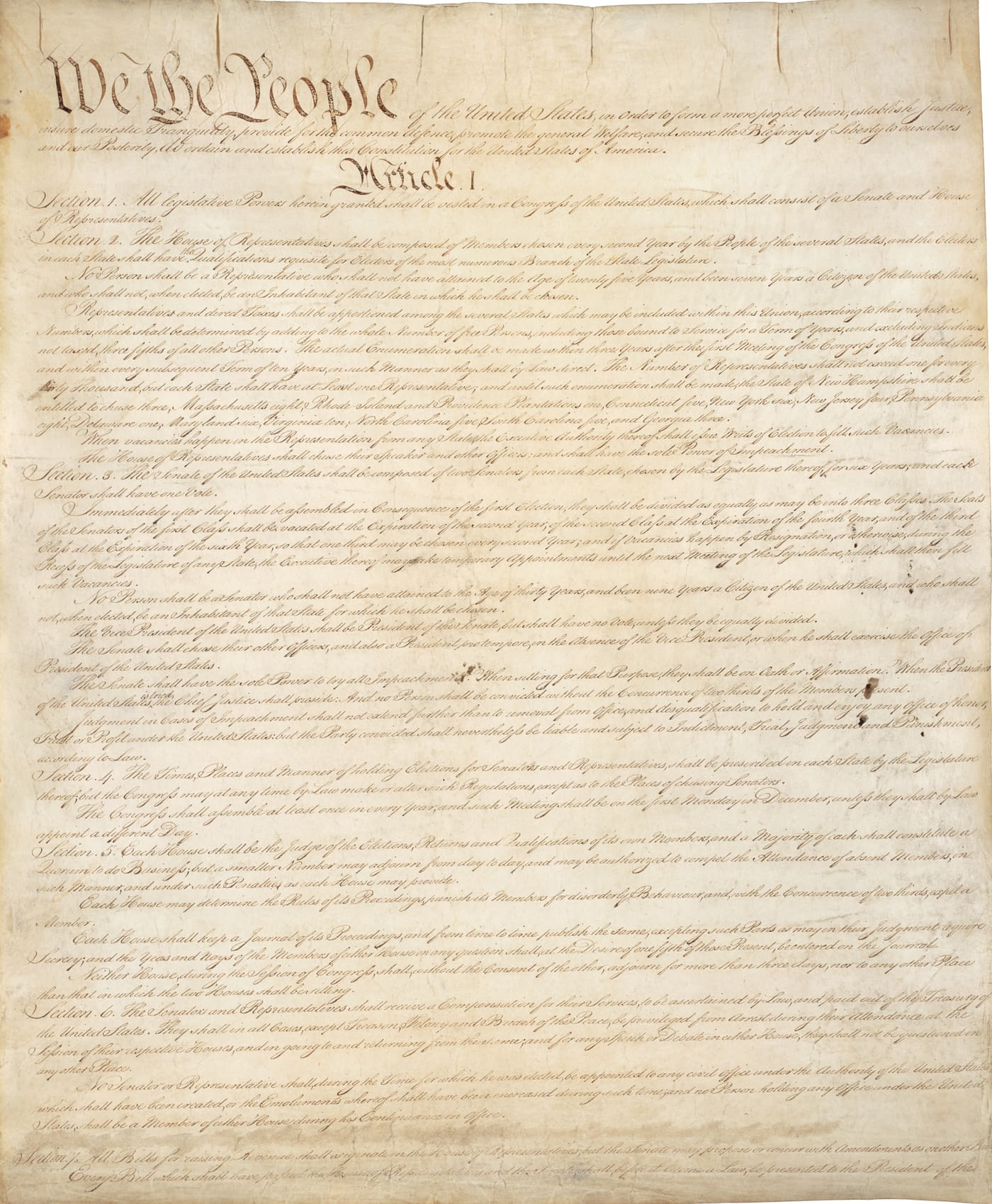
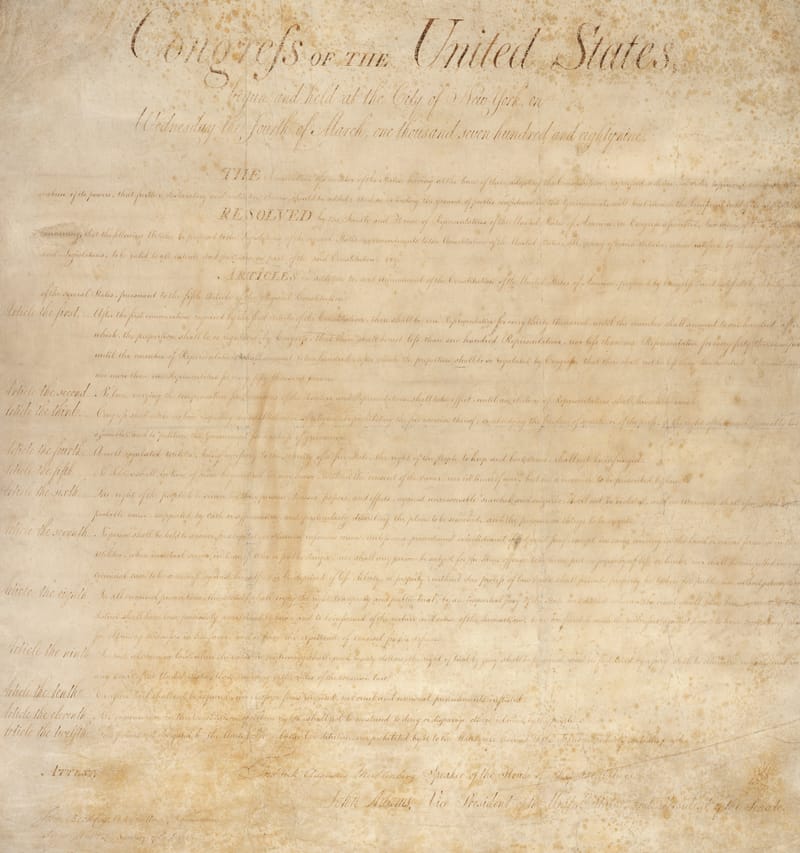
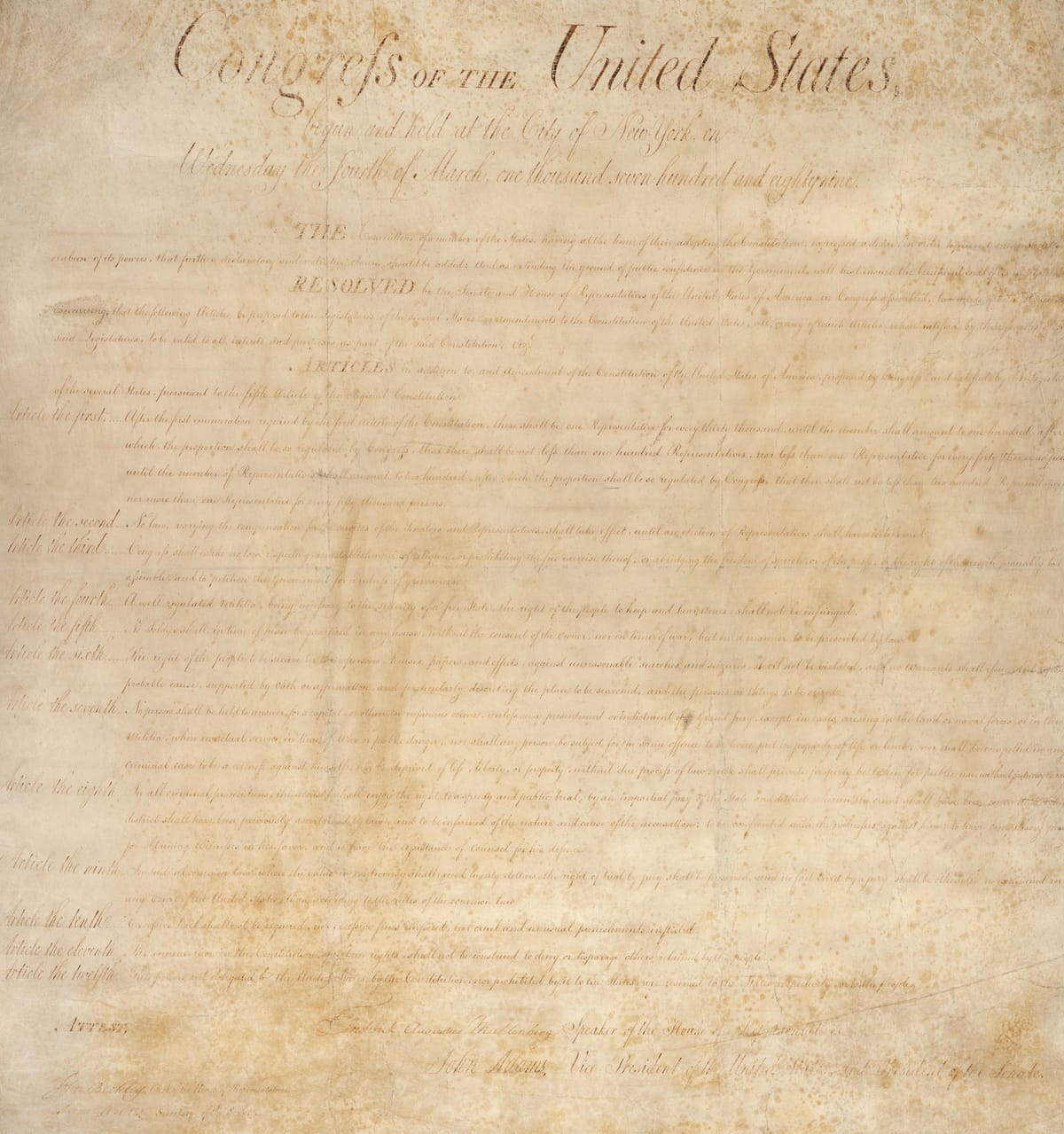
The First Amendment supplies the principal constitutional language for our understanding of religious independence. It protects the free exercise of religion and prohibits laws respecting an establishment of religion. It also protects speech, assembly, and petitioning the government for redress.
For The Church of the Only Begotten Son, these guarantees support several connected practices: gathering as a religious community; teaching our understanding of Christ; speaking openly about what we believe to be governmental or institutional wrongdoing; and pursuing religious understanding without requiring state approval of our theology.
These principles have substantial support in constitutional law. Government may not dictate religious truth or punish a person simply for holding an unpopular belief. Minority or unfamiliar religious practices are not excluded from constitutional consideration because others disagree with them.
The protection of conduct, however, involves a further legal inquiry. In Employment Division v. Smith, the Supreme Court held that the Free Exercise Clause generally does not require exemptions from neutral, generally applicable laws. In Church of the Lukumi Babalu Aye v. City of Hialeah, the Court invalidated laws that targeted a particular religious practice. Together, those cases show that the legal analysis depends on the character and application of the law, not merely on the government’s label for it. We present those holdings accurately; they do not, by themselves, decide every question about our sacramental practice.
IV. DIRECT REVELATION AND THE REJECTION OF SPIRITUAL MONOPOLY
Our concept of freedom also concerns the individual’s relationship with religious authority. Our Practice and Community teachings reject the idea that a single prophet or spokesperson must hold a monopoly over revelation. A Ward Guide facilitates discussion, while members of The Church of the Only Begotten Son are encouraged to seek their own understanding and spiritual insight.
This approach does not mean that our church has no leadership or rules. Our writings describe church leadership and certified religious leaders in connection with sacraments. We also set out expectations concerning the conduct and occupations of members. Rather, our stated principle is that religious insight and responsibility are not reserved to a single person standing between the believer and God.
The freedom we seek is therefore both institutional and personal: our community should not depend for its religious identity on the state, and each person should be encouraged to pursue a direct relationship with the divine.
V. ENTHEOGENIC SACRAMENT AND RELIGIOUS RESTORATION
The Church of the Only Begotten Son places entheogenic practice within our religious understanding. We regard sacred plants and other substances as potentially significant to communion with God and to the pursuit of spiritual knowledge. Our history presents this position as a restoration of knowledge that we believe existed in early Christian worship and was later suppressed or lost.
That historical interpretation is important to our identity. It is also contested: our account should be understood as a religious and historical interpretation of The Church of the Only Begotten Son, not as a settled conclusion accepted throughout Christian scholarship.
We distinguish sacramental use from commercial distribution and describe religious leadership, preparation, and responsibility as part of our sacramental framework. We see these features as evidence that the practice belongs to worship rather than ordinary commerce. See our Official Lawful Notice and Psychedelic Christianity.
Those distinctions can be relevant in a legal claim, but they do not automatically establish an exemption from controlled-substance law. As our own FAQ states, membership in The Church of the Only Begotten Son alone does not make possession of psychedelics legal.
VI. RFRA AND THE POSSIBILITY OF SACRAMENTAL ACCOMMODATION
The federal Religious Freedom Restoration Act, or RFRA, provides an important potential basis for protecting religious practice, including practices of The Church of the Only Begotten Son. Under 42 U.S.C. § 2000bb-1, when the federal government substantially burdens religious exercise, it must demonstrate that applying the burden furthers a compelling governmental interest through the least restrictive means.
The central sacramental precedent is Gonzales v. O Centro Espírita Beneficente União do Vegetal. The Supreme Court upheld preliminary protection for a particular church’s sacramental use of hoasca after the government failed, at that stage, to satisfy RFRA’s test. The decision is significant because it requires attention to the particular religious exercise and the government’s actual justification, rather than assuming that a general interest in enforcing drug law resolves every case.
The decision does not give The Church of the Only Begotten Son — or any church — blanket permission to use every controlled substance. Whether our church is entitled to an accommodation depends on our own facts, the applicable law, and any administrative or judicial determination. Federal RFRA also does not generally govern state and local action after City of Boerne v. Flores; state protections must be considered separately. Nothing in this paper is a prediction of a court outcome for our church.
VII. DUE PROCESS, EQUALITY, AND OFFICIAL ACCOUNTABILITY
The Church of the Only Begotten Son also invokes the Fifth and Fourteenth Amendments in support of our understanding that government must respect liberty, property, due process, and equality. The Fourth Amendment protects against unreasonable searches and seizures. These guarantees apply to religious people and communities, including ours, whose beliefs or practices may be unfamiliar to officials.
Our notices connect these protections with concern about abuse of official authority. Federal civil-rights laws can provide remedies in appropriate circumstances. For example, 42 U.S.C. § 1983 permits certain civil claims for violations of federal rights under color of state law. Federal criminal laws also address specified willful violations and conspiracies against rights.
Each law has its own elements. A private notice or fee schedule published by The Church of the Only Begotten Son does not, by itself, establish that an official violated the Constitution, remove an applicable immunity, or create an enforceable debt. Our website itself cautions that our Official Lawful Notice is not a court order or governmental determination.
VIII. CHURCH STATUS, TAX LAW, AND INDEPENDENCE
Our position distinguishes the religious existence of The Church of the Only Begotten Son from an application for official tax recognition. There is an important legal principle in that distinction: the IRS explains that churches meeting applicable requirements are generally automatically considered tax-exempt without applying for recognition.
Section 508(c)(1)(A) exempts churches from a specified notification requirement. It does not remove the substantive conditions associated with § 501(c)(3), nor does it establish exemption from every federal, state, or local tax. Whether The Church of the Only Begotten Son qualifies under those substantive conditions, and whether particular contributions to our church are deductible, depends on the applicable facts and law. This paper makes no claim that donations to our church are tax-deductible.
Thus, the strongest supportable formulation of our position is that our existence as a religious community and our ability to exercise constitutional rights do not depend on obtaining an IRS determination letter. A further claim that the absence of an application eliminates all legal or tax obligations would require separate authority, which we do not assert here.
IX. COMMUNITY, PROPERTY, AND THE PROPOSED CONSECRATED SOCIETY
Our understanding of freedom extends into our vision for community life. Our Church Structure page describes self-knowledge, authentic relationships, mutual support, productive work, and greater independence from arrangements we consider exploitative.
We also outline a proposed Consecrated Society involving voluntary commitments, shared resources, church-held property, and provision for members. We describe this as a project under development, not a society currently operating. Its proposed obligations are substantial and should not be mistaken for requirements already imposed on every ordinary member of The Church of the Only Begotten Son.
American constitutional law gives religious organizations considerable autonomy over doctrine and certain internal religious decisions. That autonomy does not automatically remove civil jurisdiction over every property dispute, contract, or alleged criminal act. Our internal rules and the protections of civil law can coexist, with the appropriate boundary depending on the particular dispute.
Conclusion
The Church of the Only Begotten Son’s concept of a free church joins several principles: Christ as our church’s head, the dignity and responsibility of each person, direct spiritual inquiry, independence from what we regard as compromising institutional arrangements, and religious protection for sacramental practice.
Our argument is that worship and conscience are not gifts dispensed by government. They are fundamental aspects of human life that constitutional guarantees protect. On that basis, we seek room to teach our beliefs, organize our religious community, challenge wrongdoing, and defend our sacramental practices.
The Constitution and federal law provide meaningful tools for those purposes. They do not automatically establish every broad claim of immunity made in a religious notice. A precise defense of our freedom can affirm the seriousness of our beliefs while recognizing the legal tests that govern particular actions. In that way, our call for independent religious life is presented as both a statement of faith of The Church of the Only Begotten Son and a constitutional argument.