
Names people search for
Blue lotus, blue water lily, Egyptian blue lotus and Nymphaea caerulea all point here. Searches for its spiritual meaning and religious use belong on this page. Nothing here describes how to obtain or prepare the flower.
The church’s frame
“If it fractals it is our sacramental or medicinal substance, given to us, by almighty God; made by him, to be used with judgement, not to excess and neither by extortion, commerce or usury”
Blue lotus is presented as history within the church’s teaching that earth-based plants and herbs may be sacred. Sacraments are for members only under church guidance.1
Egypt and symbolism
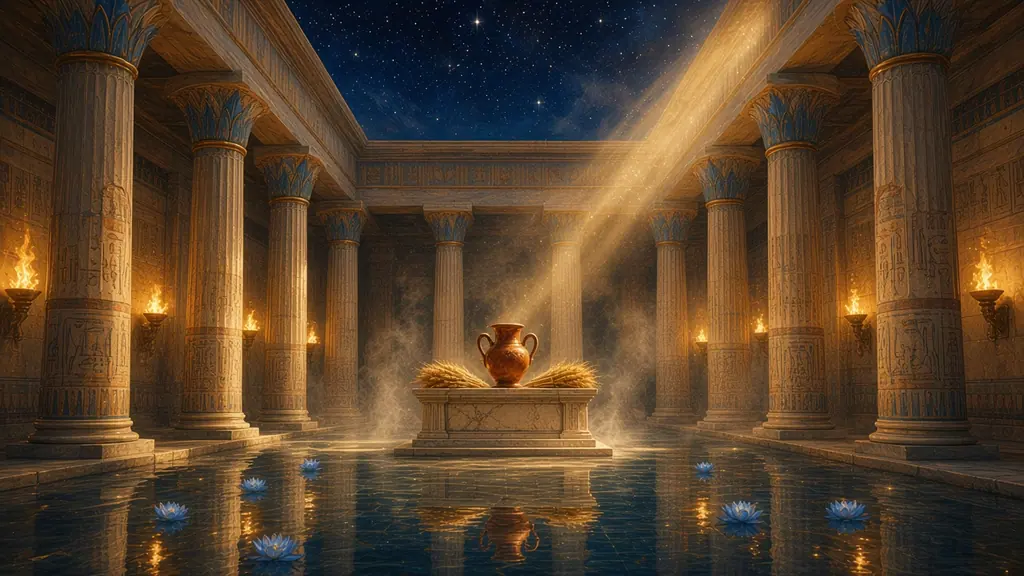
The blue water lily of the Nile appears again and again in ancient Egyptian art as a symbol of the sun and of rebirth.2
Chemical evidence
Contested Whether Egyptians used the flower for its effects in ritual has long been debated. In 2024 a team led by Davide Tanasi reported traces of blue water lily and of Syrian rue in a Ptolemaic Egyptian Bes vase of the second century BCE.3 See also Syrian rue and Ancient sacraments.
Questions and answers
What is blue lotus?
Blue lotus usually means the blue water lily of the Nile (Nymphaea caerulea), a flower that appears throughout ancient Egyptian art as a symbol of the sun and of rebirth.
Was blue lotus used in Egyptian ritual?
Iconography suggests a sacred role; whether Egyptians used the flower for psychoactive effects has long been debated. A 2024 study reported traces of blue water lily and Syrian rue in a Ptolemaic Bes vase — chemical evidence that ritual use is not merely speculative.
Sources
- Official Lawful Notice — The Church of the Only Begotten Son
- Nymphaea caerulea (blue lotus) — botany and history, with references
- Tanasi et al., Scientific Reports 14 (2024) 27891
- Ancient sacraments — The Church of the Only Begotten Son
Scholarly claims about sacred plants in history are summarized with their sources, and contested claims are marked as contested. The church’s own beliefs are quoted exactly and linked to the page where they appear.